01
Water moves
Rainwater seeps through silica-rich rock, carrying microscopic silica particles into cracks and open spaces.
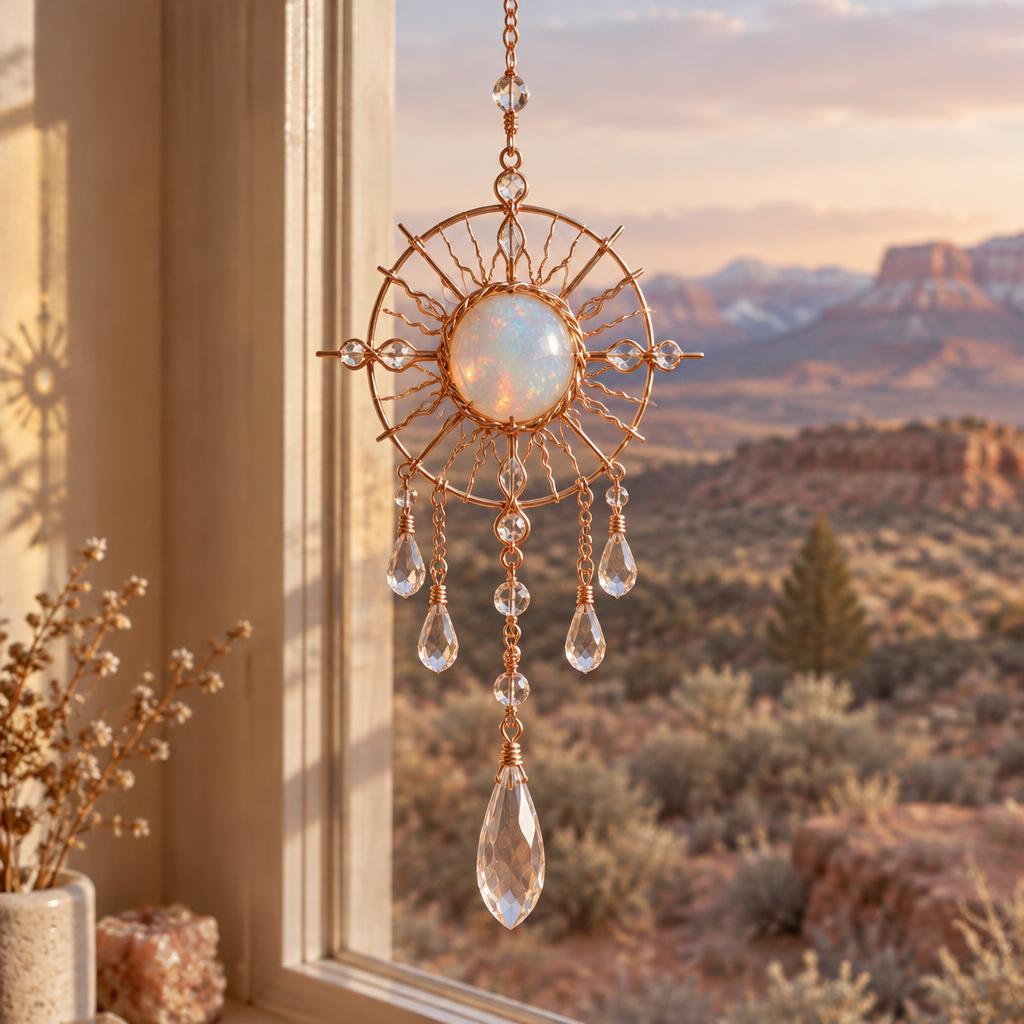
Earth · Water · Time
Opal begins in stone, transformed slowly by mineral-rich water into a gemstone that seems to hold light itself.
How opal forms
01
Rainwater seeps through silica-rich rock, carrying microscopic silica particles into cracks and open spaces.
02
As water evaporates over long periods, layers of silica remain and gradually harden into opal.
03
In precious opal, evenly arranged silica spheres bend light into the shifting rainbow known as play-of-color.
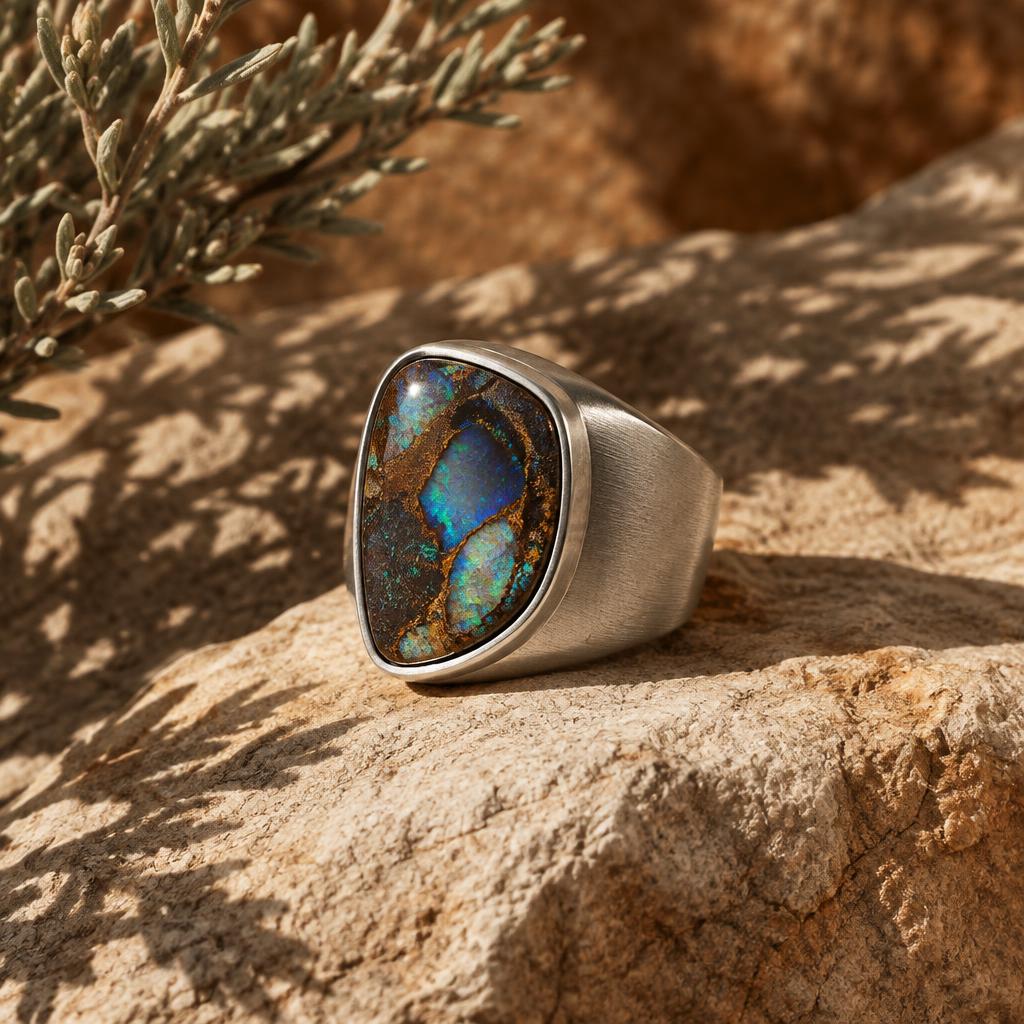
Celebrated opal regions
Known for white, black, and boulder opal. Major fields include Coober Pedy, Lightning Ridge, and Queensland.
Welo opal is often bright and translucent, with lively play-of-color and naturally varied patterns.
Famous for warm fire opal in yellow, orange, and red, sometimes with flashes of spectral color.
Opal occurs in Nevada, Oregon, and Idaho, including precious, common, and wood-replacement varieties.
Our sourcing promise
The pieces shown in this sample storefront are design examples. Before the shop launches, each listing should identify the stone type, treatment when known, and source region supplied by the seller—without making unverified mine-level claims.
Explore the collection