01
Volcanoes build the land
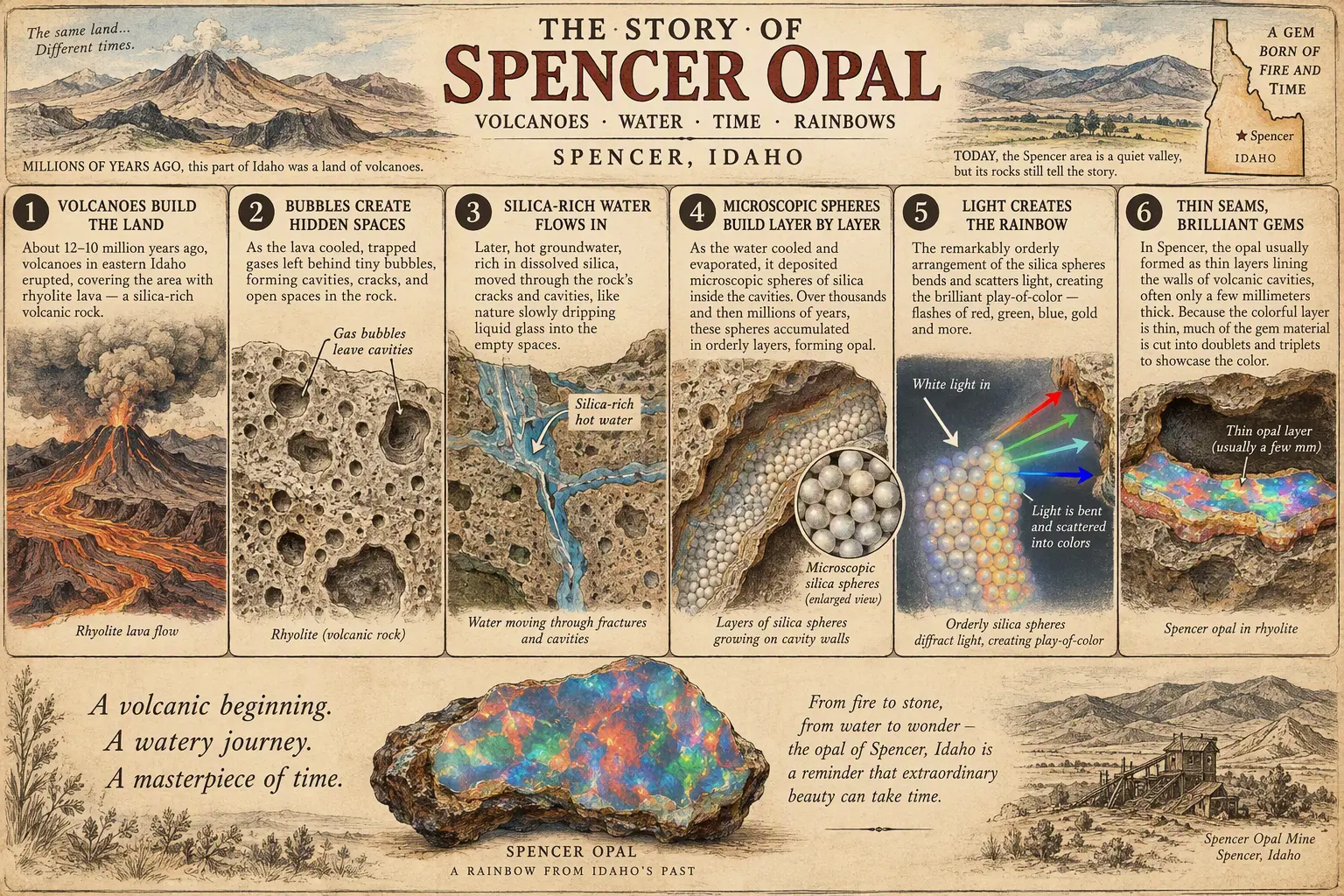
Rhyolite lava flows covered eastern Idaho. As the silica-rich volcanic rock cooled, trapped gas bubbles left tiny cavities and cracks.
Spencer, Idaho · Fire · Water · Time
Millions of years ago, eastern Idaho was a landscape of volcanoes. The story of Spencer opal begins in those ancient lava flows and ends in thin seams alive with rainbow color.
01
Rhyolite lava flows covered eastern Idaho. As the silica-rich volcanic rock cooled, trapped gas bubbles left tiny cavities and cracks.
02
Hot groundwater carrying dissolved silica traveled through those openings—almost like nature slowly dripping liquid glass into the rock.
03
Microscopic silica spheres accumulated layer by layer. Where they formed orderly patterns, light began to bend into brilliant play-of-color.
From the mine to your jewelry box
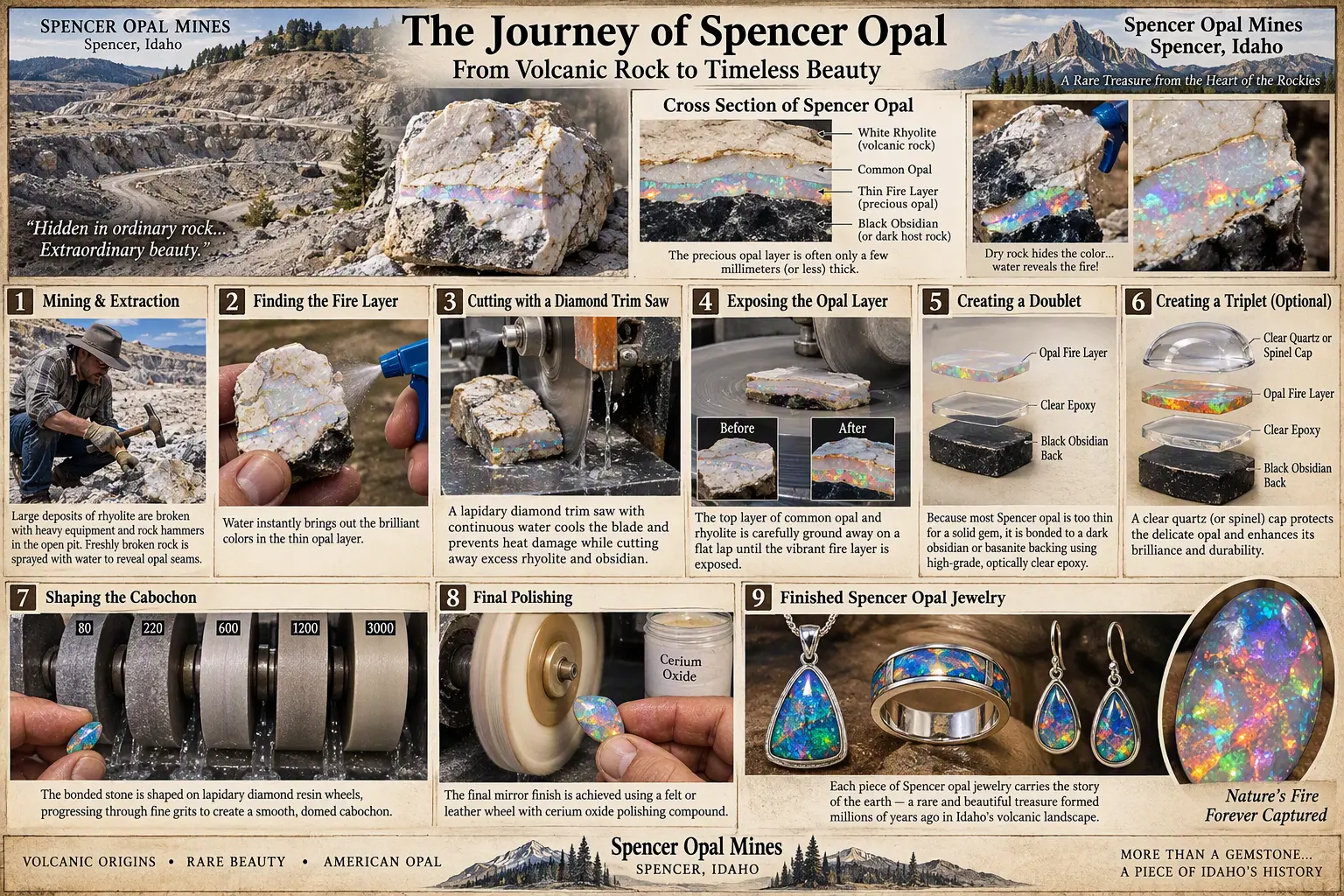
Follow a Spencer opal from the open pit through cutting, grinding, and polishing to the finished gem — and see why the colorful fire layer is often only millimeters thick.
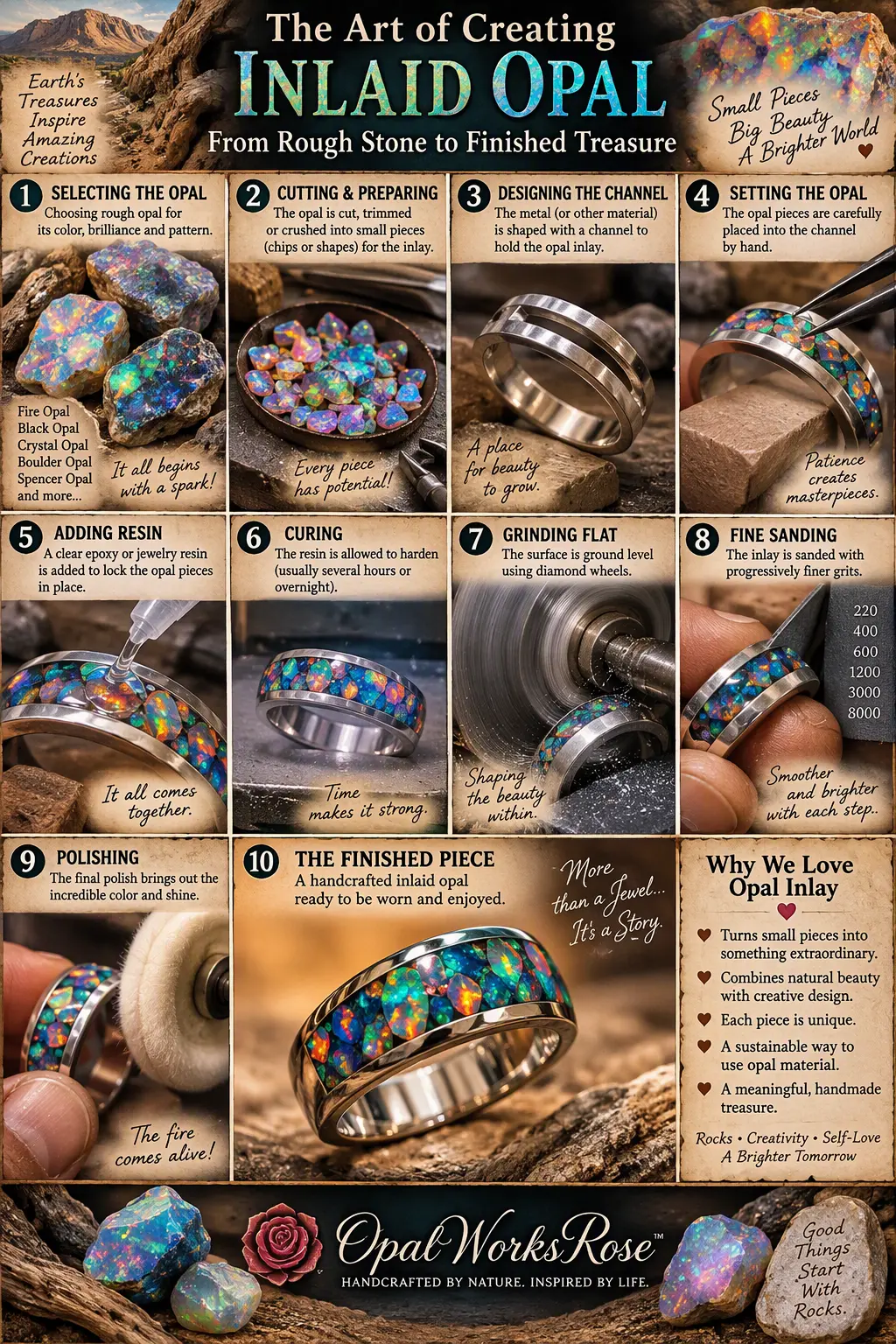
A second way to work with opal
Small opal pieces that are too petite to cut on their own become something extraordinary: crushed or shaped chips are set into a channel, locked in resin, and ground and polished flush into a smooth, colorful surface.
Why Spencer opal is distinctive
Unlike deposits that form thick nodules, Spencer opal generally developed as very thin layers lining volcanic cavities. Because the colorful seam is often only a few millimeters thick, cutters commonly create doublets or triplets that support and protect the opal while showcasing its color.
“The volcanoes built the rooms, and Earth spent millions of years decorating them with rainbows.”
Continue the story
See celebrated opal regions around the world and the sourcing information OpalWorksRose plans to share with every finished piece.
Explore opal sourcesBackground references provided by the owner: Eleven North, Rock Identifier, and Olympic Rocks.